Best Compression Socks for Nurses (2026): Four Picks for Long Shifts
Four compression socks for nurses, chosen by listed mmHg grade, fit, fabric, pack size and what buyers report about comfort and durability, plus one type to skip.


FuelMeFoot
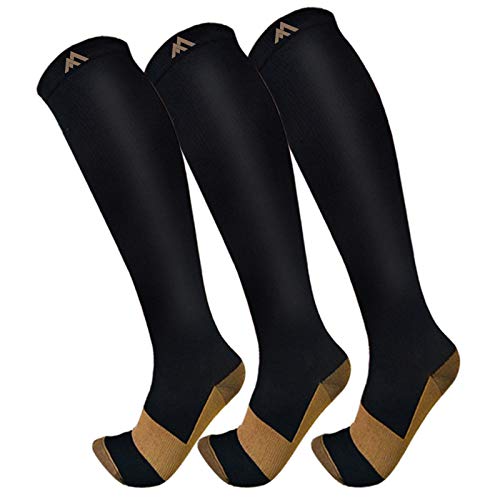
FuelMeFoot 3 Pack Copper Compression Socks - Compression Socks Women…
On this page
Nurses are the hardest job for compression socks. Long shifts on hard floors, frequent washes, hospital lighting that fades dye, scrub colors that have to match. A sock that lasts in a flight attendant’s drawer will wear out much faster in a nurse’s rotation. That’s the bar.
We chose from manufacturer specs and Amazon buyer reviews. The list comes back surprisingly short.
The short version
- Top pick, Physix Gear 20-30 mmHg. Firm graduated compression. See our full review.
- Also consider, CHARMKING 8-Pair 15-20 mmHg. Eight pairs in one pack. Lower compression grade. Right for nurses on float pool, where the laundry rotation is brutal.
- High-mileage pick, FuelMeFoot Copper. Copper-infused 3-pack. The listing doesn’t state an mmHg grade.
- Color-rotation pick, CHARMKING 3-Pair. Three pairs in one color, for nurses who need their socks to coordinate with scrubs.
- Skip, no-name “medical” compression on Amazon. Generic brands at low prices often don’t deliver the stated mmHg.
What long shifts demand
Nurse work conditions are different from any other compression-sock use case:
| Factor | Nursing reality | Why it matters |
|---|---|---|
| Wear time | Full shift, continuous | Longer than most everyday use |
| Floor type | Polished concrete, vinyl tile | No cushioning; venous pump load is constant |
| Wash frequency | Several times per week | Compression fabric breaks down at high heat |
| Activity level | Constant walking and standing transitions | Cuff slippage is a common complaint |
| Color compliance | Scrub-matching or facility-specific | Wide white-or-black range needed |
A sock that satisfies all five is rare. The Physix Gear hits most of them but is a single pair. The CHARMKING hits pack size and color but compromises on compression grade.
The picks
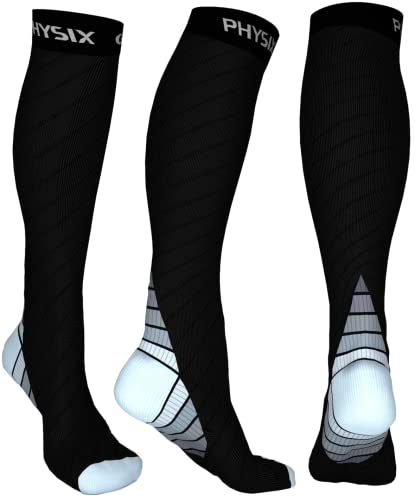
Top pick: Physix Gear Sport 20-30 mmHg
Why it’s the top: 20-30 mmHg is the firmest grade sold over the counter in the US. The listing names nurses among its intended users. The fabric is nylon and spandex.
In Amazon’s review summary, buyers describe them as good quality, effective and comfortable, and mention help with aching legs and swelling.
Why nurses pick it: Firm grade and a fit buyers describe as nice.
Why some nurses don’t pick it: It’s a single pair vs CHARMKING’s 8-pair, and buyers are mixed on how easy it is to put on. Several say the socks run big and don’t suit large calves.
Read the full review: Physix Gear 20-30 mmHg Review
Also consider: CHARMKING 8-Pair 15-20 mmHg
Why it’s here: Eight pairs in one pack, knee-high, 85% nylon and 15% spandex. Compression is 15-20 mmHg (moderate). For new grads, this is the path to having compression for every shift in your rotation.
In Amazon’s review summary, buyers say the fit stays in place and they’re easy to get on and off.
The compromise: Lower compression grade than Physix. Durability is mixed in reviews: some say they hold up after washing, others report holes in the toe area.
Best use case: Float pool or per-diem nurses who want a full week’s rotation without thinking about laundry timing. Or nurses still finding out whether compression makes a difference for them before committing to the firmer grade.
High-mileage pick: FuelMeFoot Copper-Infused Compression
Why copper: Some buyers want copper-infused socks; the listing doesn’t state what the copper is for.
Compression: The listing doesn’t state an mmHg grade. For nurses with mild varicose veins or a family history, the stated 20-30 mmHg of the Physix is the safer choice.
Build: A 3-pack, nylon, knee-high. In Amazon’s review summary, buyers praise the compression and fit and mention help with swelling in legs and feet; several say they’re too long for short legs.
Color-rotation pick: CHARMKING 3-Pair Matching Colors
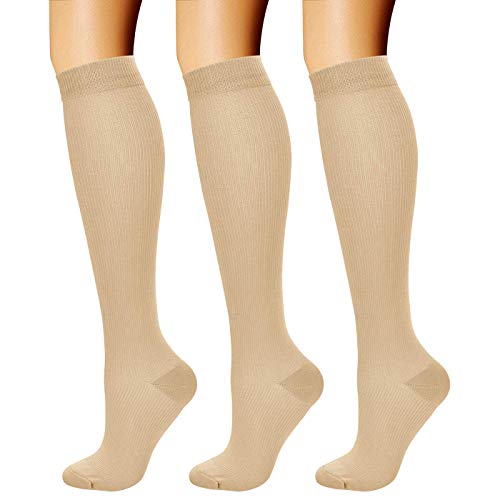
Why this exists: Some facilities have scrub-color requirements that include socks. Many multi-pair compression sets ship with mixed color assortments. CHARMKING’s 3-pair sets come in single-color packs, so all three pairs match.
For whom: Nurses in facilities with strict color compliance, especially solid-black or solid-white scrub days.
The downside: Same 15-20 mmHg compression grade and the same 85% nylon, 15% spandex fabric as the 8-pair. In Amazon’s review summary, buyers say the support is firm enough for all-day wear without being too tight.
Skip pick: Generic Amazon “medical compression”
Why we’re skipping these: Many brands sell visually identical compression socks at very low prices for multi-packs. The fabric can stretch out quickly and the pressure drops to the equivalent of a slightly tight regular sock.
The signal: If the listing says “20-30 mmHg” but the multi-pack price looks too good, be skeptical of the grade.
What to buy instead: CHARMKING 8-pair at 15-20 mmHg (stated grade) or Physix Gear single-pair at 20-30 mmHg (firm grade).
How to size
Compression socks are sized by ankle circumference and calf circumference, not shoe size. The size chart on each product’s listing maps these measurements to S/M/L/XL.
Measure with a fabric tape (or a piece of string, then a ruler):
- Ankle: narrowest point above the bone, foot relaxed
- Calf: widest point, standing
Size up if you’re between sizes. A too-tight compression sock can cut circulation rather than support it. Numb feet usually mean the sock is too tight.
Care that extends sock life
The biggest factor in compression sock longevity is wash temperature:
- Wash cold. Always. Hot water breaks down the spandex.
- Line dry or dryer-low. High heat is the second spandex killer. Physix Gear says machine wash cold, tumble dry low.
- No fabric softener. Coats the fibers and reduces compression.
- Mesh laundry bag. Prevents stretching against zippers and Velcro in shared laundry.
A properly cared-for pair lasts noticeably longer than one put through hot wash and hot dryer.
When to step up to prescription-grade
Most nurses are well-served by over-the-counter 20-30 mmHg (Physix Gear). The cases where you’d consider prescription-grade compression include:
- Diagnosed venous insufficiency
- Diagnosed lymphedema
- Post-DVT history
- Visible varicose veins worsening despite OTC compression
In these cases, see a vascular specialist. Prescription compression is fitted to your specific measurements and may include thigh-high or pantyhose-style fits that aren’t available OTC.
FAQ
Are compression socks worth it? For long standing shifts, that’s the use they’re made for. For short shifts, optional.
Can I wear them straight through a 12-hour shift? That’s the usual way to wear them. Take them off promptly after shift, sleeping in compression isn’t beneficial unless a physician prescribed it.
Will they shrink in the wash? Wash cold and follow the label. Hot wash and high heat damage the elastic.
How many pairs do I need? Enough for your rotation: one in the wash, one drying, one drawer-ready, plus backups for unexpected double shifts.
Will they help during pregnancy? Consult your OB for a grade recommendation.
Do they cause any side effects? Skin dryness is possible with continuous wear. Lotion before putting socks on, never directly on the sock fabric.
Where to buy
The picks above link directly to Amazon with our affiliate tag.
For our main category roundup, see Best Compression Socks of 2026. For the deep review of our top pick, see Physix Gear 20-30 mmHg Review.
Final word
For nurses, the Physix Gear 20-30 mmHg is our pick: the firmest over-the-counter grade.
If you’re not sure yet, the CHARMKING 8-pair is an honest entry point. Plan to step up to Physix once you’ve confirmed compression works for you.
Skip the generic “medical compression” no-name brands. Their stated grade is hard to trust.
Not medical advice. We publish consumer product reviews; consult a licensed PT before changing your routine. We earn commissions on qualifying Amazon purchases.