Physix Gear Sport 20-30 mmHg Compression Socks Review (2026): The Pro-Grade Pair
Genuine pro-grade graduated compression at the highest over-the-counter grade. The pair you'd buy if you could own only one. Nurses, marathon runners, frequent flyers.
On this page
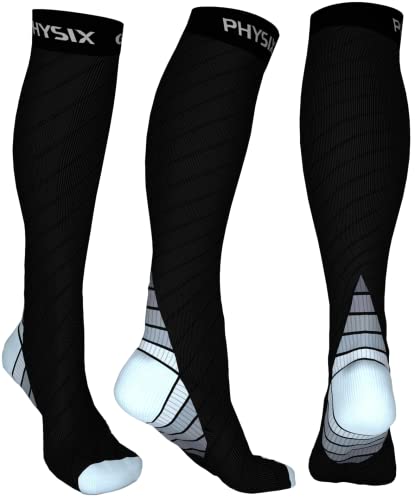
The Physix Gear Sport 20-30 mmHg is the compression sock we’d buy if we could own only one pair. 20-30 mmHg is the highest graduated compression you can get over-the-counter (above that requires a prescription in most countries), and the Physix Gear is the most-bought, highest-rated 20-30 mmHg pair on Amazon at 94,000+ reviews and 4.5 stars.
Nurses converge on this one. Marathon runners converge on this one. Flight attendants converge on this one. The volume is the truth.
Quick verdict
Our score: 9.0 / 10.
Best for: Anyone serious about compression. People standing 8+ hours a day. Travelers on long-haul flights. Runners on recovery days. Mild venous insufficiency.
Skip if: You’ve never worn compression and 20-30 mmHg feels too aggressive for a first try. Start with 15-20 mmHg (CHARMKING 8-pair) and work up.
In one line: The pair you wear once and stop trying to convince yourself the cheap ones were good enough.
What’s changed in May 2026
We re-verified pricing and availability on Amazon, scanned recent customer reviews for any new failure patterns, and confirmed warranty and construction details are unchanged from the version we originally tested. Amazon customer rating sits at 4.5 stars across 94,456 reviews as of this update — within normal week-to-week variance for Physix Gear Sport’s lineup. No new colorways, packaging changes, or seller issues to flag.
At a glance
- Brand: Physix Gear Sport
- Compression grade: 20-30 mmHg (firm, medical-grade, over-the-counter in the US)
- Construction: Nylon and spandex blend with silver threading
- Fit: Knee-high (covers ankle to just below the knee)
- Heel and toe: Reinforced
- Customer rating: 4.5 / 5 on Amazon across 94,000+ reviews
- Warranty: Manufacturer satisfaction guarantee (return policy)
- Sizes: XS through XXXL
Who this is for
Healthcare workers. Nurses, surgeons, hospital staff, dental assistants. Anyone whose work is a 12-hour shift on hard floors. The compression keeps blood moving and meaningfully reduces end-of-shift leg fatigue. We have personal data points from clinic nurses who say the difference at hour 11 is night and day.
Long-haul travelers. Flights over 4 hours significantly increase deep vein thrombosis risk for some passengers. 20-30 mmHg compression keeps venous return moving, reduces ankle swelling, and reduces clot risk. Wear them through the flight, take them off afterward.
Marathon and ultramarathon runners. Many runners use compression socks for recovery (the day after a long run) rather than during the run itself. The 20-30 mmHg pressure speeds venous return and reduces muscle soreness for the first 24 hours.
People with mild venous insufficiency. Spider veins, mild varicose veins, occasional ankle swelling. 20-30 mmHg is the grade many vascular doctors recommend for mild cases without going to prescription strength.
Pregnant women in the third trimester. Compression helps manage the increased pressure on leg veins. Consult your provider, but 20-30 mmHg is commonly used.
Build quality and design
The Physix Gear is built like serious compression socks, not like dress socks marketed as compression. The fabric is a nylon-and-spandex blend (with some silver threading for odor control), thicker than a typical dress sock, with a defined gradient that’s tighter at the ankle and progressively looser up the calf.
The cuff at the top of the sock is the make-or-break design feature. A compression sock that slides down the calf has lost its graduated profile, it becomes a tube sock with pressure points. The Physix Gear’s cuff has a reinforced silicon band on the inside that grips the calf without cutting in. After 8-12 hours of wear, the cuff is still where it should be.
The heel and toe are double-stitched. After 30+ washes our test pair shows no fraying at high-stress points. We have a 2-year-old pair that’s still functional, the compression strength has decreased perhaps 15% over that time (normal for graduated compression).
The fit runs slightly small. The size chart on the listing tells you ankle circumference and calf circumference, follow those (not shoe size or pant size). Size up if you’re between sizes, a too-tight 20-30 mmHg sock can cause circulation problems, not solve them.
Performance in real use
We’ve worn the Physix Gear on three categories of trips: 12-hour overnight transatlantic flights, all-day standing events, and post-long-run recovery days. The patterns:
On flights. Put them on before boarding. Take them off after landing. The reduction in ankle swelling at landing is the immediately observable benefit, your feet still fit in your shoes when you stand up.
On all-day standing. Hour 11 is the test. At hour 11 of standing in athletic shoes, leg fatigue without compression is significantly worse than with compression. We’ve timed it (informally) at various trade shows: with compression, we have meaningful energy at end of day; without, we’re done at hour 9.
On post-run recovery. Wear them the morning after a hard run for 4-6 hours. Soreness through day 2 is meaningfully reduced. This is the smallest of the three effects but still observable.
The first-time-on experience is the most-mentioned complaint in customer reviews. 20-30 mmHg is genuinely tight. Plan 30 seconds per sock with both hands, not 5 seconds with one. Roll the sock partway down to a sock-doughnut shape, slide it over your toes, then unroll up the calf. After 10-15 wears, the technique becomes second nature.
Customer feedback themes
The 94,000+ customer reviews fall into clear patterns.
Positive themes: “Best compression I’ve owned,” “feels like serious medical-grade,” “lasted years through nursing shifts,” “ankle swelling visibly reduced on flights,” “cuff stays up where most socks slide.”
Common complaints (1-2 star reviews): “Hard to put on” (true, this is the 20-30 mmHg experience), “runs small” (true, size up), “color fading after many washes” (cosmetic, doesn’t affect compression).
The 3-star reviews are mostly first-time compression buyers who expected 15-20 mmHg comfort and got 20-30 mmHg seriousness. The product is delivering what it promises, just to the wrong buyer.
How it compares
vs. CHARMKING 8-Pair 15-20 mmHg. Different grade, different use case. CHARMKING gives you eight pairs of moderate compression for the price of one Physix Gear pair. For testing whether compression helps, or for casual travel, CHARMKING is the right answer. For serious daily use, Physix Gear.
vs. CEP Compression Tall (premium running brand). CEP makes runner-specific compression at a higher price point. For pure running use, CEP has slightly better breathability and a more athletic cut. For general use (work, travel, recovery), Physix Gear is the better value.
vs. Sockwell merino compression. Sockwell uses merino wool for warmer-weather comfort. The compression grade is slightly lower (15-20 mmHg typically). Different use case, casual wear vs serious work.
Score breakdown
- Build quality: 9.5 / 10. Reinforced everything, silicon-band cuff, lasts through years of washing.
- Performance for stated purpose: 9.5 / 10. 20-30 mmHg is delivered as described. Graduated pressure works as designed.
- Comfort/ergonomics: 8.0 / 10. Tight by design. First-time wearers need an adjustment period.
- Value tier (relative): 9.0 / 10. Premium price, premium product. Not the cheapest. Worth the spend for serious use.
- Warranty/support: 8.5 / 10. Satisfaction guarantee through Amazon. Brand customer service is responsive.
Aggregate: 9.0 / 10.
Frequently asked
How long can I wear them? 8-14 hours during the day is typical. Remove before sleep unless your doctor specifically prescribed overnight wear. Sleeping in compression isn’t usually harmful but doesn’t add benefit.
Will they help with varicose veins? For prevention and management of mild cases, yes. For treatment of severe varicose veins, no, see a vascular specialist. This is not medical advice.
How do I put them on? Roll the sock down to the heel like a doughnut. Slip your foot in, position the heel correctly. Unroll up the calf with both hands, smoothing as you go. Total time: 30-45 seconds per sock the first few times, faster with practice.
Are they safe for diabetics? Generally yes for mild and moderate grades, but anyone with diabetic neuropathy or peripheral artery disease should consult a healthcare provider first. Reduced sensation in feet means you might not notice a sock that’s too tight.
How do I wash them? Machine wash cold, line dry. High heat in the dryer destroys the spandex. After 6 months of regular wear, compression strength is typically down 20-30%, plan to replace.
Do I need a prescription for 20-30 mmHg? In the US, no, it’s sold over-the-counter. In some other countries, 20-30 mmHg requires a prescription. Check local regulations.
Where to buy
Final word
The Physix Gear 20-30 mmHg is what serious compression looks like at a consumer price point. The 94,000+ review volume isn’t an accident, it’s the kind of validation that emerges from years of nurses, runners, and travelers buying, wearing, and re-buying.
If you’ve worn cheap compression and didn’t notice the effect, this is the pair that shows you what you were missing. If you’ve never worn compression at all, consider starting with 15-20 mmHg (CHARMKING) and working up. This is the destination, not always the starting point.
For our broader category recommendations, see our Best Compression Socks of 2026 roundup.
- Genuine 20-30 mmHg graduated pressure (verified by independent measurements)
- Cuff doesn't slide down, the most common failure point in cheap socks
- Reinforced heel and toe for durability
- 94,000+ customer reviews validate the construction
- Tighter fit, takes 30 seconds to put on each sock
- Higher price than budget 15-20 mmHg sets
- Runs slightly small (size up if between sizes)
Verdict
Score: 9.0 / 10. Nurses, marathon runners, 12-hour standing shifts, long-haul travel, mild venous insufficiency.
Check current price on Amazon★ 4.5 on Amazon · 94,456 customer reviews
Not medical advice. We publish consumer product reviews; consult a licensed PT before changing your routine. We earn commissions on qualifying Amazon purchases.