Best Compression Socks of 2026: Three Pairs Worth Owning, One Trend to Skip
Three compression sock picks chosen by listed pressure grade, fit, fabric and buyer reviews. Plus why we skip copper socks, whose listings don't back their claims.


On this page
Compression socks do a real thing. Graduated pressure (tighter at the ankle, looser at the calf) helps venous blood return to the heart, which is useful for travel, for long shifts on your feet, for some kinds of leg swelling, and for runners on recovery days.
The shopping is not. Many “compression socks” sold on Amazon are normal tube socks with mild stretch, and even the legitimate ones come in several pressure grades that nobody explains. We chose from manufacturer specs and buyer reviews. Here are the three we’d actually buy, and why we skip “copper compression.”
The short version
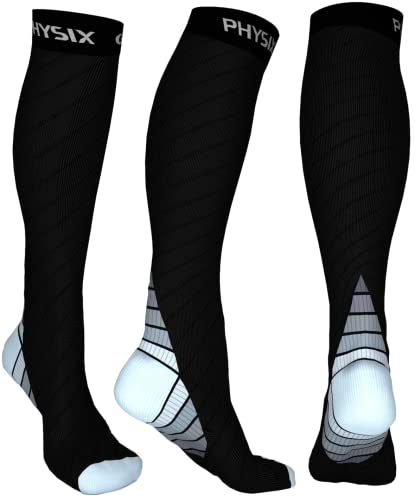
- Top pick, Physix Gear Sport 20-30 mmHg. Firm graduated compression. The pair you’d buy if you only owned one. The listing targets running, nurses, shin splints, flights and travel.
- Also consider, CHARMKING 8 Pair Set 15-20 mmHg. Eight pairs of moderate-grade compression in one pack. Right answer for travel, mild swelling, and people trying out whether compression helps before committing.
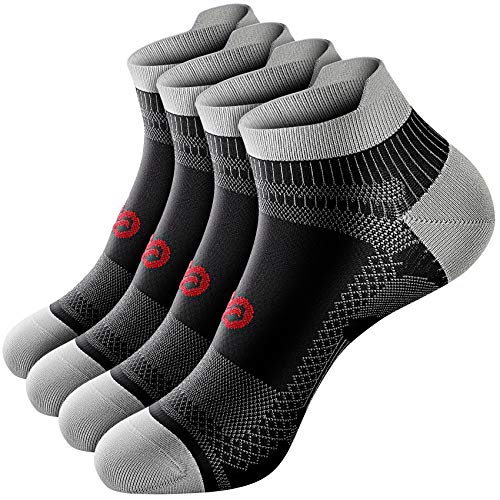
- Best for ankle and arch (running), PAPLUS Ankle Compression. Ankle-length compression with arch support. For people who don’t want full-length socks but want compression under shoes.
- Skip, Bluemaple Copper Compression. The copper is the selling point, and the listings for copper socks don’t back up what they claim for it.
At a glance
| Pick | Best for | mmHg | Where |
|---|---|---|---|
| Physix Gear Sport | Firm grade, single pair | 20-30 | Check on Amazon |
| CHARMKING 8-Pair | Volume, travel | 15-20 | Check on Amazon |
| PAPLUS Ankle | Running, under-shoe | Not listed | Check on Amazon |
| Bluemaple Copper | (Skip, see below) | Not listed | (Skip) |
What to look for in compression socks
The single number that matters is the pressure grade, expressed in mmHg (millimeters of mercury). Grades run from mild to surgical; the two you’ll see most on Amazon:
- 15 to 20 mmHg, moderate (over-the-counter). The most common grade. Flights, long days standing, post-workout recovery. Doesn’t require a prescription.
- 20 to 30 mmHg, firm. Sold over the counter in the US. Nurses, runners on recovery days. The pressure is noticeable.
- Higher grades. Prescription territory in most countries, for clinical conditions. Don’t buy these without a doctor.
Many Amazon listings hide the mmHg or bury it. Always check before buying. “Compression socks” with no grade listed may be barely compression at all.
The other things to look for: graduated pressure (tighter at the ankle, looser at the calf), reinforced heel and toe, moisture-wicking fabric, and a fit that goes to your knee without sliding down. A compression sock that slides down at the calf has lost its graduated profile, it’s now a tube sock.
The picks
1. Physix Gear Sport 20-30 mmHg, top pick
Best for: Anyone serious about compression. Nurses, runners, frequent long-haul travelers. Skip if: You’ve never worn compression and 20-30 mmHg feels too aggressive for a first try, or you have large calves.
The Physix Gear is the pair we’d buy if we could own only one. 20-30 mmHg is the firmest grade sold over the counter in the US and the grade where compression starts doing real work. The fabric is nylon and spandex; Physix Gear says machine wash cold, tumble dry low.
In Amazon’s review summary, buyers describe them as good quality, effective and comfortable, and mention help with aching legs and swelling. Several report sizing issues: the socks run big and don’t suit large calves.
The trade-off: at 20-30 mmHg, putting them on is harder than mild compression, and buyers are mixed on ease of use. If you have any wrist or hand strength limitation, start with 15-20 mmHg and work up.
2. CHARMKING 8 Pair Set, also consider
Best for: Travel. People trying out whether compression helps at all. Anyone who’d rather have eight pairs of decent than one pair of great. Skip if: You need 20-30 mmHg. The CHARMKING set is 15-20 mmHg only.
This is the right answer for the buyer who doesn’t yet know if compression socks are going to become part of their routine. Eight pairs of 15-20 mmHg knee-high compression socks, 85% nylon and 15% spandex.
In Amazon’s review summary, buyers find them comfortable, say the fit stays in place and that they’re easy to get on and off. Durability is mixed: some say they hold up after washing, others report holes in the toe area. If you’re packing for a long trip and want a fresh pair every day or two, this is the buy.
For most flyers and most office workers who stand a few hours a day, this is enough compression.
3. PAPLUS Ankle Compression, best for under-shoe running
Best for: Runners. People who want compression at the ankle and arch without a full knee-high sock. Skip if: Your reason for compression is calf swelling or travel. Ankle socks don’t address those.
PAPLUS ankle compression is a different product category from the full knee-high socks above. The compression here is at the ankle and arch, not graduated up the calf, and the listing doesn’t state an mmHg grade. For runners and walkers who want some compression in their shoes without the heat of a full sock, this is the buy. The fabric is 56% polyester fiber, 35% nylon and 9% spandex; the pack is 2 pairs.
In Amazon’s review summary, buyers mention arch support they can feel. Fit is mixed: some say they stay in place, others report feet sliding in their shoes, and some find them too small. It is not a substitute for full graduated compression if you need that. It is the better answer if you don’t.
Skip: Bluemaple Copper Compression (and all copper variants)
This is the category we’d talk you out of buying. Many brands sell “copper compression socks” or “copper-infused” socks on Amazon; the Bluemaple 6-pack is one of them, and the same critique applies to the others.
The marketing claim is that copper-infused fibers improve circulation and reduce odor. The copper listings we read don’t cite evidence for this, and the Bluemaple listing doesn’t state an mmHg grade at all. Whatever compression these socks give comes from the knit, the same as in CHARMKING.
If the marketing has convinced you specifically that you want copper, fine, the socks aren’t unsafe, they just aren’t shown to do what the copper claims say. If the marketing hasn’t gotten to you yet, buy CHARMKING, which states its grade.
How we picked
We chose from Amazon listing data and buyer review summaries.
We weighted: explicit mmHg disclosure on the listing (a transparency signal), graduated-pressure construction, fabric, and buyer reports of slide-down or pressure loss after washing. We rejected anything where the compression description was deliberately vague. We do not physically test products.
Frequently asked
Will compression socks help with varicose veins? For prevention and for managing mild cases, 15-20 mmHg or 20-30 mmHg are commonly used. For severe varicose veins, you need a vascular consultation. This is not medical advice.
How long can I wear them? During the day. Remove at night unless your physician has specifically prescribed overnight wear.
Are they safe for diabetics? Generally yes for mild and moderate grades, but anyone with diabetic neuropathy or peripheral artery disease should consult a healthcare provider first. If you have reduced sensation in your feet, you may not notice if a sock is rubbing or cutting circulation.
How tight should they be? Snug at the ankle (the highest pressure point), gradually looser up the calf. If they cut into the skin or leave deep red marks, they’re too tight, or the size is wrong. If they slide down the calf, they’re too loose.
Can I wash compression socks? Yes, follow the label: CHARMKING says machine wash; Physix Gear says machine wash cold, tumble dry low. High heat in the dryer destroys the elastic. Compression socks lose compression with regular wear, plan to replace.
Do I need a prescription? For 15-20 and 20-30 mmHg, no, they’re sold over-the-counter in the US. Higher grades are typically prescription. Outside the US, regulations vary.
Final word
If you read one sentence: buy the Physix Gear 20-30 mmHg if you want one good pair, the CHARMKING 8-pack if you want volume or you’re trying out whether compression helps, and the PAPLUS for running. Skip copper compression. The copper claims aren’t backed up on the listings.
Not medical advice. We publish consumer product reviews; consult a licensed PT before changing your routine. We earn commissions on qualifying Amazon purchases.