RESTCLOUD Neck and Shoulder Relaxer Review (2026): Simple PT Tool That Works
A curved foam neck stretcher with two height sides for short sessions on the floor. It's not a miracle, but for desk-worker neck tension it is worth a try.
On this page
The RESTCLOUD Neck and Shoulder Relaxer is the kind of product that pleases people who weren’t expecting much and disappoints people who were expecting it to fix a herniated disc. Here’s what it does and doesn’t do.
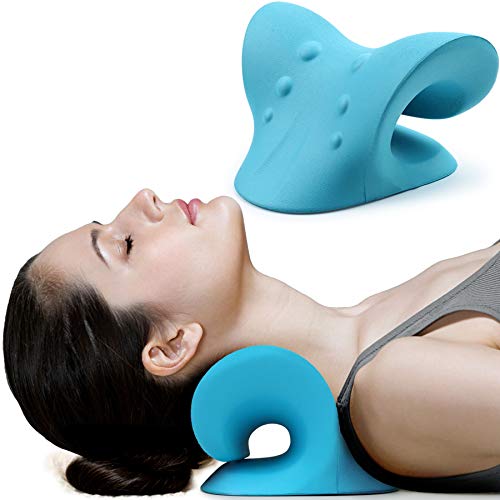
It’s a curved piece of foam, shaped to cradle the back of the neck while the head tilts gently back. You lie on it. You breathe. Ten minutes later you get up, and the idea is that the upper traps and suboccipitals, the muscles that knot up from staring at screens, feel less locked.
That’s it. That’s the product. And for desk workers with chronic neck tension, that may be enough.
Quick verdict
Best for: Desk workers, programmers, anyone with chronic upper-trap and suboccipital tightness from forward-head posture. Users who want a short decompression routine they can stick to.
Skip if: You have acute neck injury, recent whiplash, suspected disc issue, or any neck pain that hasn’t been evaluated by a doctor. Don’t try to self-treat undiagnosed neck problems with a foam device.
In one line: A simple foam stretcher that buyers say relieves pain and gives a good neck stretch, used right.
Listing check, October 2026
We re-read the Amazon listing in October 2026. RESTCLOUD recommends 10-minute sessions up to 3 times a day, starting with 5-minute sessions, and says it should not be used as an ordinary pillow overnight.
At a glance
- Brand: RESTCLOUD
- Model: Wave neck stretcher
- Construction: Polyurethane memory foam, medium firmness
- Dimensions: 8.66 x 6.69 inches (listed), wave-shaped with two height sides
- Weight: 5.08 ounces (listed)
- Care: Hand wash only
- Recommended use: 10 minutes per session, up to 3 times a day; beginners start at 5 minutes
- Warranty: Not stated on the listing
Who this is for
The RESTCLOUD is for one specific user: someone whose neck stiffness is muscular and postural, not structural.
If you work at a computer, your neck spends much of the day in forward flexion. The suboccipital muscles at the base of the skull tighten. The upper traps, the muscles that run from your neck to your shoulders, chronically elevate. By late afternoon that can add up to cervical tension that a stretch, a hot shower, or a few minutes on a device like this can ease.
This is the audience the RESTCLOUD serves. Buyers mention pain relief, effectiveness, neck stretch and posture support.
This is not the audience for someone with:
- A diagnosed cervical disc issue
- Recent injury (whiplash, falls, sports trauma)
- Numbness or tingling down the arms (radiculopathy)
- Severe headaches with associated neck pain
- Any neck pain that’s been around for more than a few weeks and hasn’t been evaluated
For those users: this product is not a substitute for medical evaluation. Don’t try to fix a structural problem with a stretching tool. RESTCLOUD’s own listing warns that improper use or too much time on the device may aggravate an existing condition.
Build quality and design
The construction is simple. The listing describes dense polyurethane memory foam with medium firmness, lightweight at 5.08 ounces, and suitable for hard surfaces like floors and yoga mats. Care is hand wash only.
The wave shape has two height sides. RESTCLOUD suggests trying both to find the best fit, since every neck is different.
The shape is the key to whether it works for you. The arc cradles the back of the skull and gently extends the neck. RESTCLOUD itself notes that the contour may not perfectly fit every individual, and that most users find their ideal comfort after an adjustment period of 1-2 weeks.
Performance
RESTCLOUD’s recommended protocol is 10 minutes per session, up to 3 times a day. Beginners should start with 5-minute sessions and build up. Longer or excessive use may cause discomfort, soreness, or dizziness, per the listing.
Early sessions: The listing says the device should never cause pain, though some slight discomfort may be felt at first. If you feel pain, numbness or dizziness, stop immediately and consult a healthcare professional. Get up slowly after a session.
Comfort: This is where buyers split. According to Amazon’s review summary, some find it surprisingly comfortable, while others say it’s too hard. If it feels too intense, try the lower height side and shorter sessions.
Over time: Buyers frequently report pain relief and a good neck stretch, and posture support gets positive feedback. It’s not a cure. Your postural habits stay the same and desk tightness still builds during the workday. The device is a quick reset, not a fix.
A note on “popping” sounds: Gentle traction on the neck can produce cracking or popping sounds. These are often harmless, but if any sound comes with pain, numbness or dizziness, stop and see a clinician.
Customer feedback themes
According to Amazon’s summary of customer reviews, topics buyers discuss include pain relief, effectiveness, comfort, value for money, neck stretch, neck support, posture support and hardness.
Positive themes: Buyers find it effective at relieving pain and providing a great neck stretch. Posture support and value for money also get positive feedback.
Negative themes: Comfort is divided. Some buyers find it surprisingly comfortable, others say it’s too hard. Combined with RESTCLOUD’s own note that the contour may not fit everyone, fit and firmness are the main risks.
How it compares
Vs. The Original Neck Hammock: Different category. The Neck Hammock attaches to a door and uses your bodyweight for traction; the RESTCLOUD is floor-based. The RESTCLOUD is more convenient (no setup, no door, just lie down). The easier device is often the one you’ll actually use daily.
Vs. Lumia Wellness Cervical Orthotic Block: The Lumia is a foam block with a different curvature. Users with a clinical background may prefer the Lumia; the RESTCLOUD suits everyone else.
Vs. acupressure-spike “cervical traction” devices: Avoid these. The marketing implies medical efficacy; the construction is plastic spikes that dig into the neck. For desk-worker tightness, you want a smooth-surface stretch tool, not a pressure-point gadget.
Vs. seeing a physical therapist: A real PT visit will diagnose what’s actually going on, address postural habits, and prescribe targeted exercises. The RESTCLOUD doesn’t replace that for serious issues. It’s a maintenance tool for users whose neck tension is mild-to-moderate and clearly tied to desk habits.
Frequently asked
Will this fix my herniated disc? No. The RESTCLOUD is a stretch tool. It doesn’t change the underlying disc problem. If you have a diagnosed disc issue, talk to your doctor or PT before using any cervical traction device.
How often should I use it? RESTCLOUD recommends 10 minutes per session, up to 3 times a day, starting with 5-minute sessions. Don’t sleep on it. If you feel worse after sessions, stop and get evaluated.
What if my first session feels too intense? Use the lower height side, shorten the session, and build up gradually. RESTCLOUD says most users find their comfort after an adjustment period of 1-2 weeks. Pain, numbness or dizziness means stop.
Can I use it during pregnancy? Ask your obstetrician or midwife first. Lying flat may also become uncomfortable later in pregnancy.
Does it help with tension headaches? Some people with tension-type headaches linked to neck tightness find neck stretching helpful, but headaches have many causes. Get frequent or severe headaches evaluated. For migraine, see our migraine ice pack roundup for cold therapy options.
How long does the benefit last? It varies from person to person. Think of it as a short daily reset alongside better desk habits and exercise, not a one-time fix.
Where to buy
RESTCLOUD Neck and Shoulder Relaxer on Amazon
Multiple sellers may carry the product; buy from the official RESTCLOUD listing where you can.
Final word
The RESTCLOUD does one thing: it gives desk workers a short neck-decompression habit, and buyers say it relieves pain and gives a good neck stretch. It’s light and simple. For users with structural neck issues, it’s the wrong tool and they should see a clinician. For everyone else with a sore neck from too much screen time, it’s an easy thing to try.
- Buyers frequently report pain relief and a good neck stretch
- Two height sides to try for a better fit, per the listing
- Lightweight foam, 5.08 ounces per the listing, easy to take anywhere
- Short sessions: RESTCLOUD recommends 10 minutes, starting at 5
- Buyers disagree on comfort; some find it too hard
- May not fit every neck; RESTCLOUD says to allow an adjustment period
- The marketing implies more than it can deliver. It's a stretch tool, not a cure
Verdict
Desk workers with chronic upper-trap and suboccipital tightness who want a short daily decompression habit.
Check current price on AmazonNot medical advice. We publish consumer product reviews; consult a licensed PT before changing your routine. We earn commissions on qualifying Amazon purchases.