Best Foam Rollers of 2026: Four Worth Buying, One to Skip
Four foam rollers compared on listed firmness, length, build and what buyers report. Plus the popular one we'd skip, and what to buy instead.


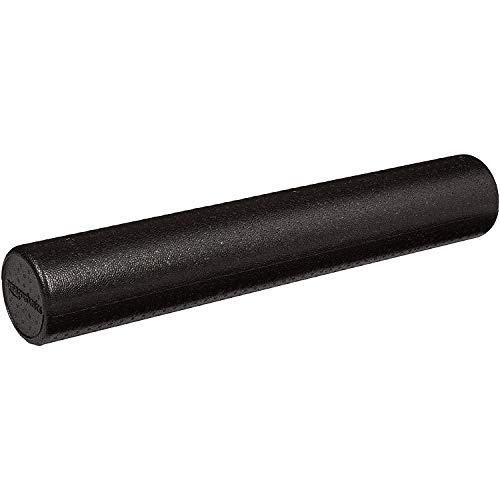
Amazon Basics
Amazon Basics High-Density Foam Roller for Exercise, Stretching and…
On this page
Foam rollers are the cheapest piece of recovery gear you’ll ever buy, and the easiest to overspend on. There are a handful of rollers worth owning. There are hundreds you don’t need.
We chose these picks from manufacturer specs on each Amazon listing and Amazon’s summary of buyer reviews. Here’s what we’d recommend, plus the one popular pick we’d skip.
The short version
- Top pick, TriggerPoint Grid 1.0. EVA foam wrapped around a hollow core, with a multi-density surface of ridges and nodules. The listing says it keeps its shape after repeated use. The standard answer when someone asks what to buy.
- Also consider, 321 Strong. A similar-length textured roller. It’s listed as medium density, softer than the Grid’s “Extra Firm,” and for general lats, quads, and upper back, that’s often what you want.
- Best for back-rolling, Amazon Basics High-Density 36”. The full 36-inch length is the difference between rolling your upper back and rolling your spine. If your back is the main reason you bought a roller, this is the one.
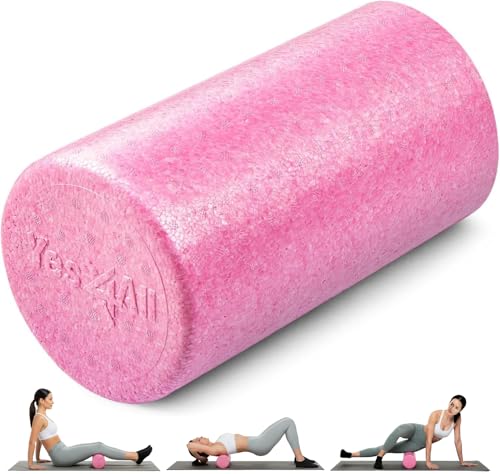
- Most versatile, Yes4All EPP, in your choice of length. Sold in 12, 18, 24, and 36 inches. Buy the 24-inch if you’re not sure.
- Skip, ProsourceFit 36”. It’s a fine product. It’s also a smooth, firm 36-inch high-density roller doing the same job as the Amazon Basics 36”. There’s little reason to choose it.
At a glance
| Pick | Best for | Listed firmness | Length | Where |
|---|---|---|---|---|
| TriggerPoint Grid 1.0 | Daily use, multi-muscle | Extra Firm | 13” | Check on Amazon |
| 321 Strong | First roller, medium density | Medium | 12.7” | Check on Amazon |
| Amazon Basics 36” | Whole back | Firm | 36” | Check on Amazon |
| Yes4All EPP | Versatility, multi-length | Extra Firm | 12–36” | Check on Amazon |
| ProsourceFit 36” | (Skip, see below) | Firm | 36” | (Skip) |
What to look for in a foam roller
The hard part of buying a foam roller isn’t the shopping. It’s that “foam roller” actually describes four very different objects: smooth dense cylinders, textured multi-density cylinders, soft beginner rollers, and vibrating motorized rollers. They have different jobs.
Density. A new roller should feel uncomfortable but not unbearable. Soft rollers (the white blocks at gyms) are fine at first and that’s about it. Medium-density rollers like the 321 Strong are a good middle ground. Firmer rollers (the Grid, the smooth high-density EPP and polypropylene cylinders, RumbleRoller-style) are for people who want more pressure.
If you’re new to rolling, start medium. Skip soft.
Length. A 13-inch roller fits in a gym bag, rolls one leg or one shoulder at a time, and travels well. A 36-inch roller stays at home and lets you lie back on it lengthwise, the only way to roll your full upper back and open up your thoracic spine. If you bought a roller “for back pain,” you want 36. If you bought it “for IT bands and quads,” 13 is fine.
Surface texture. Smooth rollers compress tissue evenly. Textured rollers (the grid pattern on TriggerPoint, the bumps on RumbleRoller) press deeper into specific points and feel meaningfully different.
A sensible pair is a textured 13-incher for sport-specific work and a smooth long roller for back.
Durability. This is where the spec sheet matters most. Both the TriggerPoint and 321 Strong listings claim their rollers keep their shape. Cheap foam rollers can dent permanently, and the Amazon listings will not tell you which ones will. Read the customer reviews, specifically the recent 1- and 2-star ones, looking for “lost shape” and “flattened.”
The picks
1. TriggerPoint Grid 1.0, top pick
Best for: Anyone whose answer to “what should I buy?” is “a foam roller” and who doesn’t want to keep shopping. Skip if: You specifically need a long roller for upper-back work. The Grid is 13 inches.
The Grid has been a default recommendation for foam rollers for a long time; Amazon lists it as first available in January 2009. The listing describes EVA foam wrapped around a hollow core, firmer than traditional foam rollers, with a multi-density pattern of ridges and nodules meant to replicate a massage therapist’s hands. The hollow core keeps it light enough to throw in a gym bag; the listing gives 1.1 pounds.
Amazon’s summary of buyer reviews says it performs as advertised and that buyers find its firmness neither too soft nor too hard, though some say it can be uncomfortable at first.
The downside: the 321 Strong does much of the same job at a softer listed density. If you want the firmer feel, this is the one to buy.
2. 321 Strong Foam Roller, also consider
Best for: Anyone who wants a softer roller than the Grid, or anyone buying their first roller. Skip if: You’ve used a textured roller before and want something with more aggressive contact. 321 Strong is listed as medium density.
This is the alternative to the Grid: a similar length (12.7 inches on the listing), a lightweight core wrapped in closed-cell EVA foam, and a softer listed density.
The listing describes three zones of projections, the smallest like fingertips, larger ones like thumbs, and the largest like the base of the palms, and says it has no hard plastic and won’t deform. Amazon’s summary says buyers find it sturdy and effective at getting deep into muscles, but they disagree on hardness and size: some find it too hard, and some say it’s barely large enough to roll the whole back and shoulders. It comes in several colors under different ASINs; this link is the Aqua one.
If you want medium density, this is what you buy.
3. Amazon Basics High-Density 36”, best for back-rolling
Best for: Lying back on it lengthwise. Thoracic mobility. People whose main reason for buying was upper back tension or hunched-shoulder office posture. Skip if: You wanted a textured roller. This one is smooth.
Smooth, firm, long, and unfussy. The full 36-inch length is the only way to roll your full spine without rotating between two halves. If you’ve ever lain back on a roller at a gym to “open up” your chest after a day of typing, this is the same idea, you’re using the roller as a fulcrum to mobilize the thoracic spine. A 13-inch roller can’t do this.
The Amazon Basics version is a smooth cylinder of firm polypropylene with molded edges, 36 x 6 x 6 inches per the listing. There are no textures to dig into specific spots, which is the right answer for what this roller is for, it’s not a deep-tissue tool, it’s a spine mobilizer. Amazon’s summary says buyers report no signs of wear over months of use, though some find it too hard.
The catch: if you wanted a single roller that does everything, this isn’t it. Lying back on a 36-inch smooth roller for thoracic work, then trying to use the same roller on your IT band, is like washing dishes with a fire hose. Get this for back, get one of the 13-inchers above for everything else.
4. Yes4All EPP, most versatile (your choice of length)
Best for: People who don’t know what length they want and are comfortable with a firm roller. Skip if: You already know you want a 13-inch textured roller, just get the Grid. Or you’re brand new to rolling: the listing says it’s designed for advanced users.
Yes4All sells the same high-density EPP roller in 12, 18, 24, and 36 inches, each 6 inches across. The link above opens the 18-inch listing; pick your length on the listing. The 24-inch is the in-between size, long enough to lie back on for upper-back rolling, short enough to use one-leg-at-a-time on quads and IT bands. If you’re not sure what you need, the 24-inch is the safest single purchase.
The surface is smooth, not textured, and the listing calls it “Extra Firm.” Amazon’s summary says buyers find it effective for back pain and stretching, with firmness feedback mixed: some find it perfect, others extremely hard.
Where this falls short of the picks above: it’s a generic high-density EPP roller. If you want texture, you’ll want one of the first two picks as well.
Skip: ProsourceFit High Density 36”
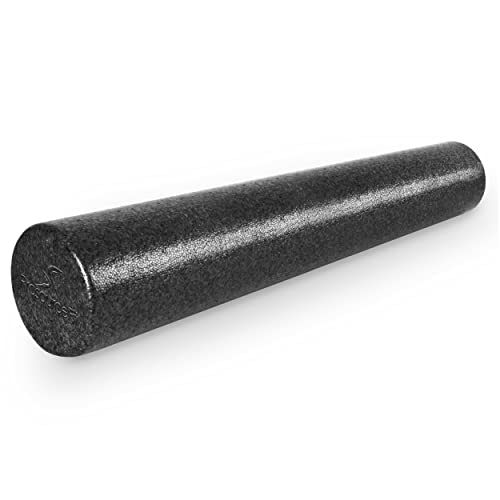
This is the product we’d talk you out of buying. It’s not bad, it’s a 36-inch high-density EPP foam roller. The problem is that it does the same job as the Amazon Basics 36”: smooth, firm, full-length, and the listing itself says new users may find it sensitive. There’s little reason to choose it over Amazon Basics.
If you’re set on a 36” smooth roller and Amazon Basics is out of stock, the OPTP PRO-Roller Soft is the next option to look at. Otherwise, buy Amazon Basics.
How we picked
We chose from Amazon listing data and buyer review summaries, and deduplicated across color and size variants of the same physical product.
We weighted shape-retention over feature count. We rejected anything with consistent buyer reports of denting, anything where the texture was decorative rather than functional, and anything where the listing photo and customer photos clearly didn’t match.
We did not physically test these rollers. We re-read the Amazon listings in October 2026.
Frequently asked
How often should I use a foam roller? Short, regular sessions beat long, rare ones. If a muscle group feels worse the next day, give it a rest day before rolling it again.
Should it hurt? It should be uncomfortable but tolerable. If you’re flinching, the roller is too aggressive for where you are right now. Step down to a softer roller for a while, then re-evaluate. Sharp pain means stop.
Can I use a foam roller on my IT band? You can, for general lateral-thigh tension. You can also roll the muscles attached to it, the tensor fascia latae and the glute medius. Roll up high (hip and lateral glute) more than mid-thigh.
How long does a foam roller last? A high-density EVA, EPP or polypropylene roller (TriggerPoint, 321 Strong, Amazon Basics) generally outlasts the soft white ones, which are the first to dent. Watch for flattening and replace it when it no longer holds its shape.
Vibrating foam rollers, worth it? Probably not, for most people. They cost more than a regular roller. If cost matters, get a regular Grid 1.0 and roll a little longer.
Cork rollers, worth it? Cork rollers are heavier, more eco-friendly, and significantly less forgiving than foam. They’re also more expensive. Unless you specifically want the firmness or have an environmental preference, foam is the better default.
Final word
If you read one sentence: buy a TriggerPoint Grid 1.0 if you want firm texture, a 321 Strong if you want medium density, and an Amazon Basics 36” alongside either if you bought the roller specifically for your back. Don’t buy the ProsourceFit. Don’t buy a soft roller. Don’t pay extra for vibration. That’s it.
Not medical advice. We publish consumer product reviews; consult a licensed PT before changing your routine. We earn commissions on qualifying Amazon purchases.