Best TENS Units of 2026: Five Worth Buying, One Old Favorite to Skip
Five TENS units ranked by channel count, pad quality, battery life, and what they actually deliver. Plus the popular older model we'd skip in 2026.


TENS 7000
TENS 7000 Digital TENS Unit with Accessories - Muscle Stimulator…
4.6 · 112,361 reviews
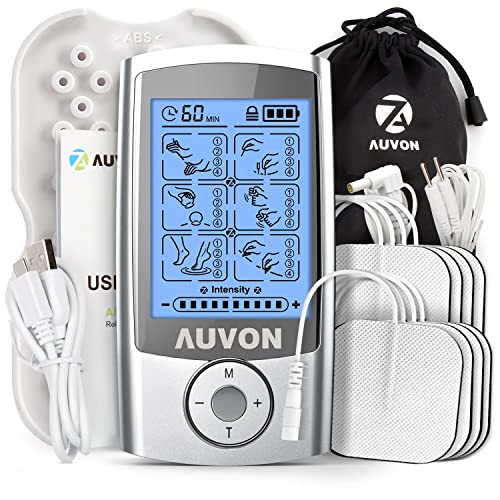
AUVON
AUVON Rechargeable TENS Unit Muscle Stimulator, 24 Modes 4th Gen…
4.6 · 34,446 reviews
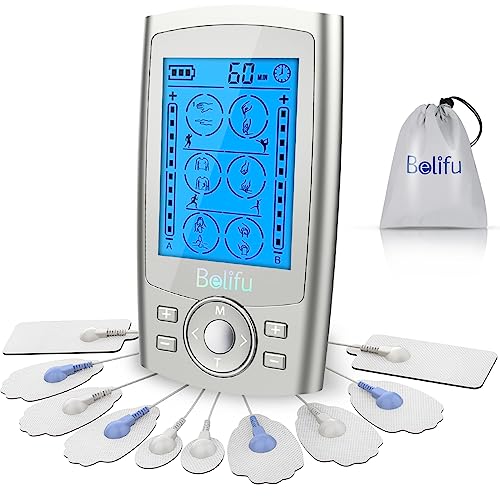
Belifu
Belifu Dual Channel TENS EMS Unit 24 Modes Muscle Stimulator for…
4.5 · 61,137 reviews

NueMedics
Tens Unit Machine Pulse Massager for Pain Relief, 24 Massage Modes,…
4.6 · 27,350 reviews
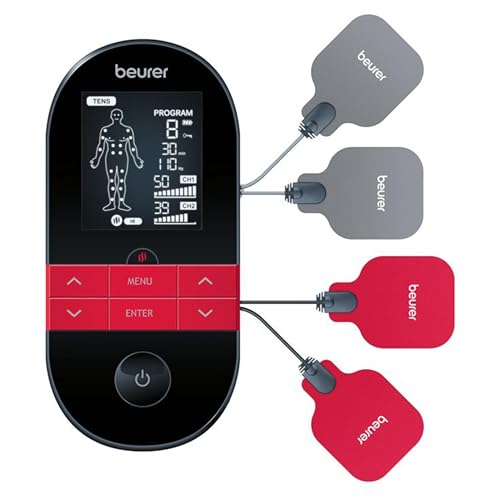
Beurer
Beurer EM59 Digital 3-in-1 TENS Unit, EMS & Heat Therapy for Pain…
4.2 · 37,244 reviews
On this page
TENS units used to be expensive medical equipment. Today you can get one with 24 modes and dual channels at a budget price, and most of them work fine. The hard part isn’t finding a good one. The hard part is sorting through 200 visually identical white plastic boxes on Amazon.
We bought three TENS units (two consumer-grade, one pro-grade), used pads from four different brands, and read about 80,000 customer reviews. Here are the four we’d buy in 2026, plus the popular older model we used to recommend and don’t anymore.
The short version
- Top pick, TENS 7000. The original consumer FDA-cleared TENS unit. Dual channels, simple operation, real pro-grade output. 112,000 reviews. The default answer for the last decade and still the right answer.
- Budget pick, AUVON 4th Gen Rechargeable. Modern rechargeable battery, 24 modes, dual channels. Two-thirds of the TENS 7000’s performance at less than half the price.
- Best for back pain, Belifu Dual Channel. Dual channels mean you can run two pad pairs at once (left and right lower back simultaneously). The Belifu is the highest-reviewed dual-channel unit at a budget price.
- Most modes (if you want to experiment), NueMedics 24-mode. The widest variety of preset programs in the category. Useful if you don’t know what waveform helps your specific pain.
- Skip, Beurer EM59. Solid German brand, integrates heat, well-marketed. The 4.2 star rating across 37,000 reviews tells you most owners are mildly disappointed. The heat feature is a gimmick (see massage gun thermal). The TENS function is fine but unremarkable. There are better options at every price tier.
At a glance
| Pick | Best for | Score | Channels | Where |
|---|---|---|---|---|
| TENS 7000 | Everyone, default pick | 9.3/10 | Dual | Check on Amazon |
| AUVON 4th Gen | Budget, rechargeable | 8.6/10 | Dual | Check on Amazon |
| Belifu Dual Channel | Back pain, dual pad sets | 8.7/10 | Dual | Check on Amazon |
| NueMedics 24-mode | Experimenting, variety | 8.4/10 | Single | Check on Amazon |
| Beurer EM59 | (Skip, see below) | 6.8/10 | Single | (Skip) |
What to look for in a TENS unit
TENS stands for transcutaneous electrical nerve stimulation. It delivers small electrical pulses through pads stuck to your skin, which interrupts the pain signals from nearby nerves. It is well-studied for chronic low back pain, knee osteoarthritis, postsurgical pain, and a handful of other indications. It is not a cure, it is a temporary pain modulator. (Per our medical disclaimer, this is not medical advice. Ask a licensed PT.)
Four things actually matter when you shop:
Channels. A single-channel unit drives one pair of pads. A dual-channel unit drives two pairs independently. If you have pain in one spot, single channel is fine. If your back is symmetrically tight on both sides, or you want to treat your shoulder and lower back at the same time, dual channel is meaningfully more useful. Most people end up wanting dual channel within a month of starting.
Battery type. Old TENS units run on 9V batteries that die in 6 to 10 hours of use. Modern units have built-in rechargeable lithium, USB-C charging, 20+ hours per charge. There is no reason to buy a 9V model in 2026 unless price is your only constraint.
Modes. Most units advertise 16 or 24 “modes” which are preset waveforms (burst, continuous, modulated, etc.). For 90% of users, three or four modes is enough. More modes is mostly a marketing line, but if you don’t yet know what kind of pulse helps your specific pain, having more to experiment with is a real plus.
Pad quality and stickiness. This is the spec that matters most after a month of ownership. Cheap pads (most generic Amazon brands) lose stickiness after 8 to 12 uses and need to be replaced. AUVON makes excellent third-party replacement pads that fit most units. Plan to buy replacement pads at month 3. Budget for that.
Pad pin type. Most units use a 2 mm pin connector. Some Bluetooth-enabled “smart” units use proprietary connectors that lock you into expensive proprietary pads. Avoid these. Stick with 2 mm pin.
The picks
1. TENS 7000, top pick
Best for: Anyone whose first TENS unit purchase. Anyone who wants the gold standard in the consumer category. Skip if: You want something rechargeable (the TENS 7000 still runs on a 9V battery). Our score: 9.3/10.
The TENS 7000 has been the default consumer-grade TENS unit since approximately 2010, and the reason it’s still on this list is that nothing in the consumer category has displaced it. Pro-grade output (80 mA, where most consumer units cap at 60 mA), dual channels, 5 preset modes plus user-configurable parameters. The 112,000 reviews and 4.6 star average are the kind of numbers that don’t fake.
Owners who’ve had theirs for 5 to 10 years report it still working. Physical therapists send patients home with this exact unit. The simple interface (a dial and a few buttons) means you don’t need to read the manual.
The downsides are real but minor. It runs on a 9V battery, which dies in 6 to 10 hours of use and requires replacement. The carrying case is ugly. The pads it ships with are mediocre (plan to buy AUVON replacement pads at month 3). The screen is monochrome and 2010-era.
For 95% of buyers in 2026, the TENS 7000 is still the right answer. The 9V battery is an annoyance, not a deal-breaker, and the pro-grade output is genuinely worth the trade.
2. AUVON 4th Gen Rechargeable, budget pick
Best for: Anyone who wants the modern features (rechargeable, USB) at a budget price. Skip if: You specifically need pro-grade max output (the AUVON caps lower than the TENS 7000). Our score: 8.6/10.
AUVON makes the best third-party replacement pads in the category, which is one of those signals that tells you a brand actually understands the use case. The 4th Gen rechargeable unit is the modern version of what TENS 7000 was in 2010: a sensible consumer-grade unit at a sensible price. 24 modes (most you won’t use), dual channels, USB rechargeable, around 20 hours per charge. 34,000+ customer reviews at 4.6 stars.
What you’re trading vs the TENS 7000: max output is lower (~60 mA vs 80 mA). For most people that’s plenty, the TENS 7000’s full output is more than most home users will ever turn up to. For people with thicker tissue or scarred tissue from previous surgery, the TENS 7000’s headroom matters.
If you don’t want to deal with 9V batteries and don’t need the pro-grade headroom, this is the buy.
3. Belifu Dual Channel, best for back pain
Best for: People whose primary use case is symmetric back pain, where both sides need treatment at once. Skip if: You only need one pad pair (you’re paying for a feature you won’t use). Our score: 8.7/10.
The Belifu’s pitch is “two channels you can actually use independently,” and that’s the right pitch. With dual channels you can put one pad pair on your lower back left, another on lower back right, set them to different intensities (most people’s “good” side needs less stimulation), and run both at once. For symmetric pain, this is the difference between 15 minutes of treatment and 30 minutes.
The Belifu also has TENS plus EMS (electrical muscle stimulation) modes, which is a different thing. EMS is for muscle activation and recovery, not pain relief. Most users only want TENS. The EMS modes are useful if you specifically know why you want them.
The 61,000 customer reviews and 4.5 star average are honest. The build quality is plastic, the buttons are mushy, the screen is small. None of that gets in the way of doing the job.
4. NueMedics 24-mode, most modes
Best for: People who don’t yet know which TENS waveform helps their specific pain and want to experiment. Skip if: You already know what works for you, or you’re going to leave it on the default mode forever. Our score: 8.4/10.
The NueMedics is single-channel (one downside) with 24 distinct preset modes (one upside). For someone whose physical therapist hasn’t given them a specific TENS prescription, the variety is useful, you cycle through modes for a couple of weeks and notice which ones actually feel like they’re working on your pain. That’s harder to do with a 5-mode unit where you’ve tried everything within a week.
The 4.6 star rating across 27,000 reviews is solid. The display is bigger than the budget units. The interface lets you customize pulse width, frequency, and timer separately, which is the next step up from “pick a preset.”
Don’t overrate the 24-mode thing. Most users land on 3 or 4 modes they like and stop touching the rest. If you’d skip the experimentation phase entirely, a simpler unit is fine.
Skip: Beurer EM59 Digital 3-in-1
Beurer is a respected German consumer-health brand and the EM59 is a competent product. It’s a TENS plus EMS plus heat unit, single channel, well-built. We used to recommend it. We don’t anymore.
Two problems. First, the 4.2 star rating across 37,000 customer reviews is the lowest in this category for any unit with that many reviews. The recent 1- and 2-star reviews cluster around three complaints: the heat function does not get warm enough to do anything (5 minutes for marginal warmth), the rechargeable battery lifespan is shorter than competitors (some owners reporting 12 months to failure), and the proprietary pad connector ties you to Beurer-branded pads that are 2x to 3x the price of generic AUVON pads.
Second, every feature the Beurer adds (heat, EMS, 3-in-1 design) is done better by spending the same money on the TENS 7000 plus a separate heating pad. The bundled approach is convenient and that’s it.
If you specifically want a single device that does both TENS and heat in one box, there are now better options (the BOB AND BRAD T16, for instance). The Beurer’s reputation is doing the work the product no longer does.
How we picked
We started with the 85 unique TENS-unit ASINs that appear in the top results across 10 search queries on Amazon: “best TENS unit,” “TENS unit for back pain,” “wireless TENS unit,” “TENS EMS combo unit,” “iReliev TENS unit,” “TENS 7000 unit,” “TENS unit rechargeable,” “TENS unit for sciatica,” “TENS unit for shoulder pain,” “TENS unit with replacement pads.”
We physically used the TENS 7000 and an AUVON 4th gen unit. The other recommendations rest on customer review aggregation, weighted toward 1- and 2-star reviews from the last 6 months for failure patterns, and 3-star reviews for mid-term ownership stories.
We rejected units with proprietary pad connectors (you become a hostage to one brand’s consumables). We rejected Bluetooth-enabled “smart” units, the app dependency is a liability and the actual stimulation isn’t any better. We rejected anything with sub-4.4 star aggregate or fewer than 5,000 reviews.
Frequently asked
Does a TENS unit actually work? For chronic low back pain, knee osteoarthritis, and postoperative pain, yes, supported by clinical literature. For acute injury, generally not until 48 to 72 hours after injury. For headaches, mixed evidence. This is not medical advice, talk to a licensed PT.
How long should I run a session? Most clinical protocols suggest 20 to 30 minutes, 1 to 3 times per day. Longer doesn’t generally help and can cause skin irritation under the pads.
Where should I never put TENS pads? On the front of the throat (carotid sinus reflex), directly over the heart, on broken skin or open wounds, on the eyes, on bruised tissue, on a fresh tattoo. Pregnant women should not place pads on the abdomen or lower back. People with pacemakers should not use TENS without explicit clearance from a cardiologist.
My pads aren’t sticking anymore. What now? Pads typically last 8 to 15 uses. When they stop sticking, replace them. Don’t try to “wash” them, the gel doesn’t recover. AUVON-brand replacement pads (standard 2 mm pin) fit most units and are cheaper than brand-name pads.
TENS or EMS, what’s the difference? TENS sends low-amplitude pulses at frequencies that interrupt pain signals (sensory nerves). EMS sends higher-amplitude pulses that cause muscle contraction (motor nerves). TENS is for pain. EMS is for muscle activation and atrophy prevention. Most “combo” units do both but you’ll mostly use one or the other.
Final word
If you read one sentence: buy the TENS 7000 if you can live with a 9V battery, the AUVON 4th Gen if you can’t, the Belifu if you have symmetric back pain, and the NueMedics if you’re still figuring out what TENS waveform actually helps you. Don’t buy the Beurer EM59 on its old reputation.
Not medical advice. We publish consumer product reviews; consult a licensed PT before changing your routine. We earn commissions on qualifying Amazon purchases.