Best Resistance Bands of 2026: Five Worth Buying, One Set to Skip
Five resistance band picks ranked by tension consistency, durability, and what they're actually good for. Plus the popular interchangeable set we'd skip.
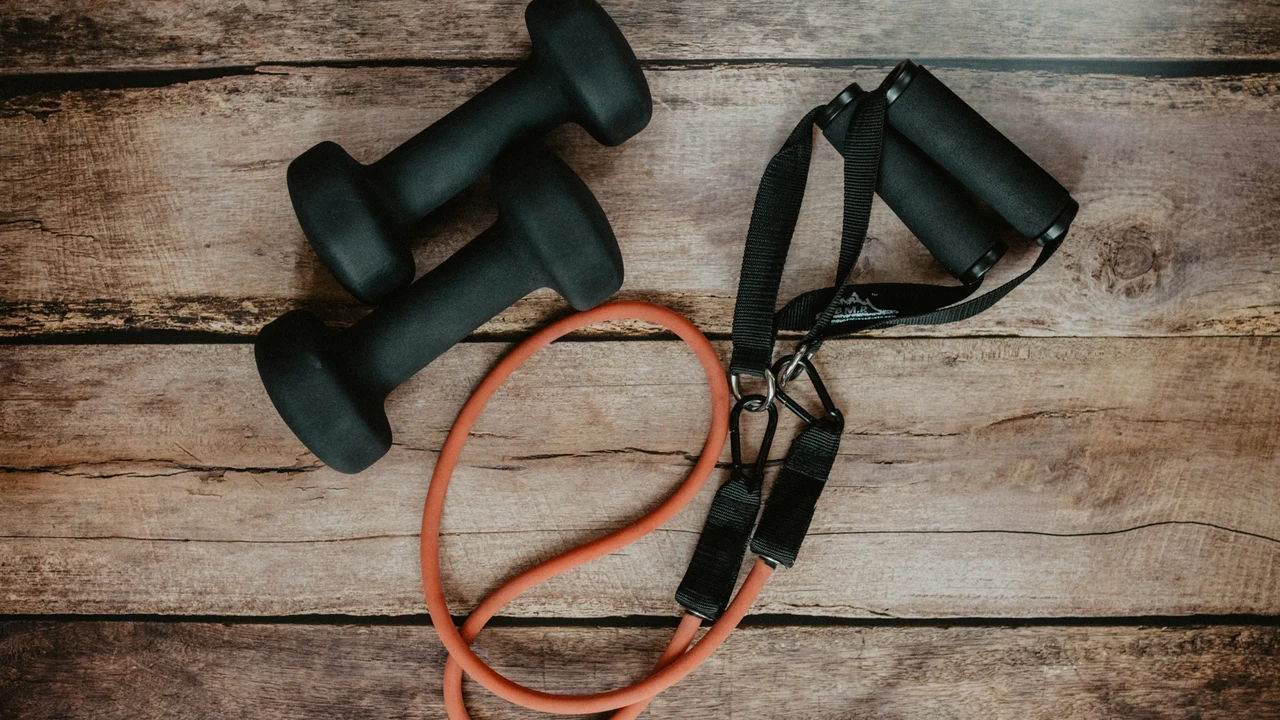

Fit Simplify
Fit Simplify Resistance Loop Exercise Bands with Instruction Guide…
4.5 · 135,414 reviews
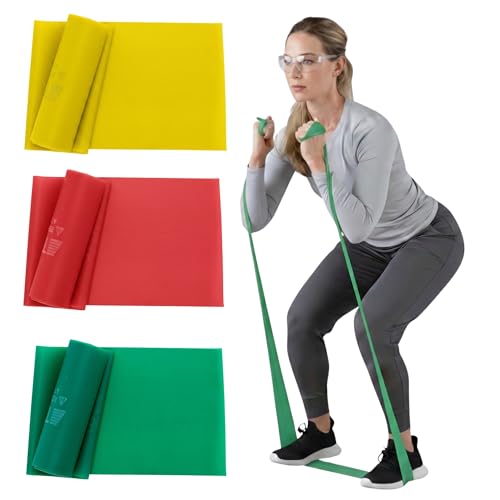
THERABAND
THERABAND Resistance Bands Set, Elastic Bands for Exercise &…
4.5 · 10,937 reviews
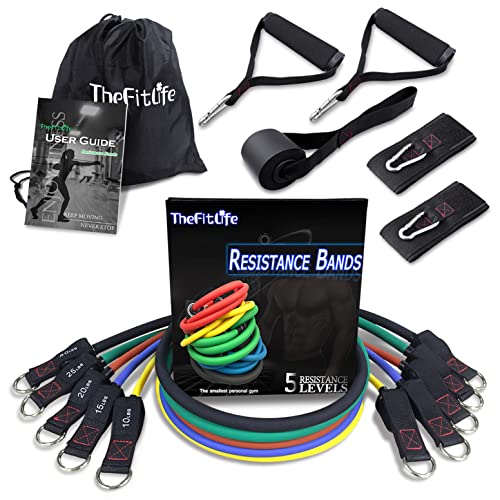
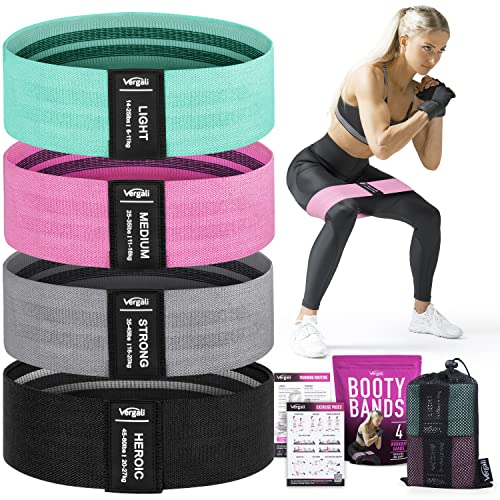
Vergali
Resistance Bands for Working Out with Workout Bands Guide. 4 Booty…
4.8 · 21,533 reviews
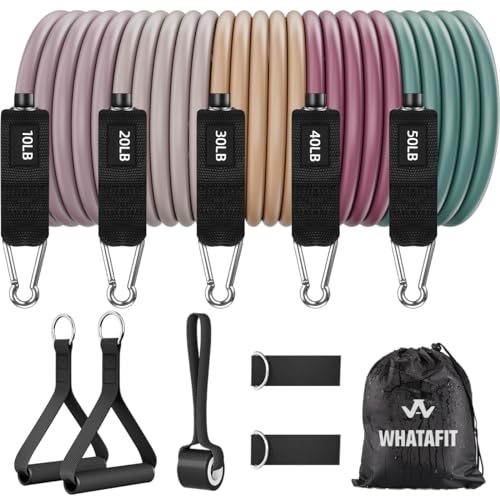
WHATAFIT
WHATAFIT Resistance Bands, Exercise Bands, Workout Bands with…
4.6 · 35,708 reviews
On this page
There are four physically different objects sold as “resistance bands” and they have four different jobs. Loop bands for glutes and hip work. Therapy bands (flat sheet, often labeled TheraBand) for shoulder and elbow rehab. Tube bands with handles for full-body strength work at home. Fabric bands for booty and lower-body activation.
A buying guide that tells you to get a “set” usually picks one type and pretends the others don’t exist. Here are the five we’d actually own (one per format, plus the best clinical pick) and the popular set we’d skip.
The short version
- Top pick (loop bands), Fit Simplify. 135,000 customer reviews. The default loop-band set for the last decade. Five color-coded resistances, decent latex, comes with a pouch. The volume answer that earned its reputation.
- Premium clinical pick, TheraBand Set. The gold standard in physical-therapy clinics. Flat sheet latex (not loop, not tube), consistent tension you can actually grade. Used by every PT clinic we’ve ever been in.
- Best tube bands with handles, TheFitLife 5-piece. Five tubes of varying resistance, comfortable foam handles, two ankle straps, a door anchor. The full home-gym substitute.
- Best fabric bands (glutes), Vergali Booty Bands. Three fabric loops of escalating resistance. Don’t slide up your legs the way latex loops do, which is the actual problem fabric bands solve.
- Skip, WHATAFIT. It’s a fine resistance band set. It’s also functionally interchangeable with TheFitLife at a similar price point. There’s no reason to choose it.
At a glance
| Pick | Best for | Score | Format | Where |
|---|---|---|---|---|
| Fit Simplify | Loops, glutes, general | 9.1/10 | Loop, latex | Check on Amazon |
| TheraBand Set | PT, rehab, clinical | 9.0/10 | Flat sheet | Check on Amazon |
| TheFitLife 5-piece | Full body, home gym | 8.7/10 | Tube + handles | Check on Amazon |
| Vergali Booty Bands | Glutes, non-slip | 8.6/10 | Fabric loop | Check on Amazon |
| WHATAFIT | (Skip, see below) | 6.5/10 | Tube + handles | (Skip) |
What to look for in resistance bands
The first decision is format. Buying the wrong format is the most common mistake.
Loop bands (latex rings). Color-coded by resistance, usually five in a set, no handles. Most useful for: hip and glute activation, lower-body warm-ups, light rehab, banded squats. Cheap to replace, light to travel, the most-bought format on Amazon. They tend to slip up your legs during exercises, especially on bare skin, which is the reason fabric bands exist.
Therapy bands (flat sheet, TheraBand style). Flat latex sheets, no loop, usually sold in 5-yard rolls or pre-cut lengths. Most useful for: shoulder rehab, rotator cuff work, anything where a physical therapist actually prescribed bands. The flat shape lets you grip with the full hand instead of a single finger.
Tube bands with handles. Rubber tubes with sewn-on foam handles, often with door anchors and ankle straps. Most useful for: full-body strength training, home-gym substitution, travel workouts. Higher max resistance than loops, more accessory work possible.
Fabric bands. Woven fabric loops, often used for booty/glute activation work. Don’t slip on bare skin (the latex-loop problem). Limited in resistance (mostly low-medium range). Used almost exclusively for hip and glute exercises.
A typical home buyer ends up with one set of loops, one set of fabric bands, and a roll of TheraBand. Total spend: well under typical retail. That’s enough.
On durability. All resistance bands have a finite life. Latex degrades with UV exposure, with oil contact (skin oil counts), and with overstretching. Plan to replace your loops every 18 to 24 months of regular use, your fabric bands every 24 to 36 months, your TheraBand roll as needed. The “lifetime warranty” claims you see are typically a return-shipping promise, not a real lifetime.
The picks
1. Fit Simplify Loop Bands, top pick
Best for: Anyone whose first resistance bands. Anyone whose use case is hip and glute activation, light rehab, or banded squats and deadlifts. Skip if: You specifically need higher resistance than the heaviest band in this set (around 30 lbs equivalent). Our score: 9.1/10.
135,000 customer reviews and a 4.5 star average is the kind of volume that doesn’t fake. Fit Simplify’s five-band set is the default Amazon answer for resistance bands and the reason it’s still the default is that nothing in the budget tier has displaced it. The bands are color-coded by resistance (yellow = lightest, black = heaviest), the latex is consistent batch to batch, and they come with a small drawstring pouch.
Owners report the bands lasting 12 to 24 months under regular use before showing wear. The most common failure mode is the lightest band tearing first (it’s stretched the most), which is a known pattern across every brand. The lightest band is also the one you replace first regardless.
The catch with all latex loops: they slip up your bare legs during exercises that involve hip extension. This is the actual reason fabric bands exist (see Vergali below). For exercises where you can wear pants over the band, this isn’t an issue. For bare-leg booty work, you’ll want fabric bands as a second purchase.
2. TheraBand Set, premium clinical pick
Best for: Anyone whose physical therapist specifically mentioned “TheraBand,” for shoulder rehab, rotator cuff work, or any time you want graded resistance with the kind of consistency a clinic relies on. Skip if: You wanted loop bands for hip work. This isn’t that. Our score: 9.0/10.
TheraBand has been the brand physical therapists send patients home with for 30+ years. The product is straightforward, color-coded flat latex sheets in standard widths. What you’re paying for is consistency, the resistance in a Red TheraBand from 2026 is the same resistance as a Red TheraBand from 2015. Every clinic uses the same system, every PT prescribes by color, and the patient can replace the band without re-grading.
This is a different product from Fit Simplify. It’s not a loop. It’s not designed for squats. It’s designed for the slow, graded shoulder-rotation exercises that rebuild rotator cuff function after an injury. If that’s not why you’re buying, get Fit Simplify.
The downside is the price. TheraBand pays for the clinical brand name. For someone whose PT has handed them a band and said “match the color when you replace,” it’s worth it. For someone who just wants light resistance latex, the generic equivalent is a third the price.
3. TheFitLife 5-Piece Tube Bands, best for full-body work
Best for: People building a home gym on a budget. People who travel and want a strength workout without dumbbells. Higher-resistance work that loop bands can’t deliver. Skip if: Your use case is hip activation or light rehab. Loops are simpler. Our score: 8.7/10.
TheFitLife’s set is five rubber tubes (each with sewn-on foam handles) of escalating resistance, two ankle straps for lower-body work, a door anchor for pulling exercises, and a carry pouch. Stacked together at full extension the set delivers around 150 lbs of resistance, which is enough for a meaningful chest press, row, or pull-down at home.
The handle quality is the differentiator. The foam grip is comfortable for higher-rep work. The carabiner clips that connect bands to handles are metal (cheap sets use plastic clips that fail under load). The 36,000+ reviews at 4.6 stars are a real signal.
The catch is durability. Tube bands are slightly more fragile than flat latex, and the most common failure is the band tearing at the clip junction after 12 to 18 months of regular full-stretch use. Plan to replace.
4. Vergali Booty Bands, best fabric loops
Best for: Glute activation work. People who hate the way latex loops slip up their bare legs during hip-thrusts and side-step exercises. Skip if: You wanted high resistance. Fabric bands max out at medium-low resistance. Our score: 8.6/10.
Vergali’s three fabric bands solve the one real problem with latex loops, slip. Fabric bands sit on bare skin without rolling, which is the only way to do bare-leg booty exercises without constantly fussing with the band. The 4.8 star rating across 21,000+ reviews is among the highest in the category.
What fabric bands don’t do: replace latex loops for general training. The resistance range is meaningfully lower (think 5-15 lbs equivalent across the three bands), the durability is shorter (fabric eventually frays at high-stretch points), and they’re not useful for upper-body work. Buy them as a supplement to loop bands, not a replacement.
Skip: WHATAFIT 5-Band Tube Set
WHATAFIT’s set is one of the best-rated tube-band kits on Amazon (4.6 stars, 35,000 reviews) and it is, by every visible measure, the same product as TheFitLife. Same five-tube structure, same handles, same door anchor, same ankle straps, same carrying pouch, similar price point. The construction quality is similar enough that side-by-side photos don’t reliably distinguish them.
There’s no reason to choose WHATAFIT over TheFitLife unless one is in stock and the other isn’t. If you’re shopping with two tabs open and they’re identical, go TheFitLife. If TheFitLife is out of stock, WHATAFIT is fine. We don’t separately recommend it because there’s no separate reason to.
How we picked
We started with the 150 unique resistance-band ASINs in top results across 10 search queries: “best resistance bands set,” “loop resistance bands,” “tube resistance bands with handles,” “fabric resistance bands hip,” “TheraBand resistance bands,” “resistance bands for physical therapy,” “resistance bands door anchor,” “pull up assist bands,” “heavy resistance bands powerlifting,” “mini bands booty.”
We sorted by format first (loop, therapy, tube, fabric) because they’re not interchangeable. Within each format we weighted: tension consistency batch-to-batch, recent 1- and 2-star reviews for tearing or fraying patterns, handle and accessory quality on tube sets, and brand consistency (a brand that ships the same product 5 years running is rare and valuable in this category).
We physically used Fit Simplify loops and a TheraBand roll. The TheFitLife, Vergali, and WHATAFIT recommendations rest on customer review aggregation and side-by-side spec comparison.
Frequently asked
Which color is heaviest? For Fit Simplify, the order is yellow (lightest), red, black, blue, green (or similar variation by manufacturer). For TheraBand, the order is universal across the brand: yellow, red, green, blue, black, silver, gold. Always check the listing, color-to-resistance varies between non-TheraBand brands.
Why do my loop bands keep slipping? The latex is sliding on bare skin, especially during hip extension or lateral movement. Three fixes: wear thin leggings or tights so the band has fabric to grip, switch to fabric bands for those specific exercises (see Vergali above), or move the band higher on your thigh where the muscle is denser.
Can resistance bands replace weights? For most home users, yes, for 80% of common exercises. The thing bands do less well than dumbbells is the bottom of the range of motion, where the band has less tension. Bands are also harder to grade precisely (you can’t say “I added 5 lbs”). For pure strength, dumbbells are better. For activation, mobility, accessory work, and travel, bands win.
How long do bands last? Loop bands: 12-24 months of regular use. Tube bands with handles: 12-18 months. Fabric bands: 24-36 months. TheraBand flat sheet: as long as you don’t damage it, the latex itself is durable but loses elasticity over 3-5 years.
Are bands safe for older adults or rehab? Generally yes, that’s specifically what they’re designed for. TheraBand was developed for clinical rehab. Loop bands at the lighter colors (yellow, red) are gentle enough for most rehab protocols. Always start with the lightest resistance and work up. Consult a PT for specific rehab programs.
Final word
If you read one sentence: buy Fit Simplify loop bands as your first set, add TheraBand only if your PT specifically prescribes it, get TheFitLife tubes if you want a real home-gym substitute, and add Vergali fabric bands if you’re doing serious glute work. Don’t buy WHATAFIT, it’s the same product as TheFitLife.
Not medical advice. We publish consumer product reviews; consult a licensed PT before changing your routine. We earn commissions on qualifying Amazon purchases.