Best Posture Correctors of 2026: Two That Work, Five That Are Theater
Two posture devices that actually change posture, plus what to do instead of buying most of them. Honest assessment of a category dominated by theater.

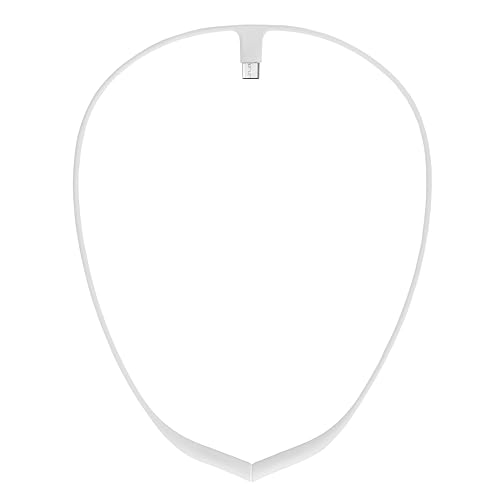
Upright GO
Upright Magnetic Necklace (Necklace Only) for GO S and GO 2 Posture…
4.2 · 2,652 reviews

ComfyBrace
ComfyBrace Posture Corrector-Back Brace for Men and Women- Fully…
4.0 · 46,163 reviews

Schiara
Schiara Posture Corrector for both Men and Women, Comfortable Upper…
4.1 · 31,051 reviews

Brand: Fitsupport
Fitsupport Back Brace Posture Corrector for Women and Men Back…
4.0 · 12,222 reviews
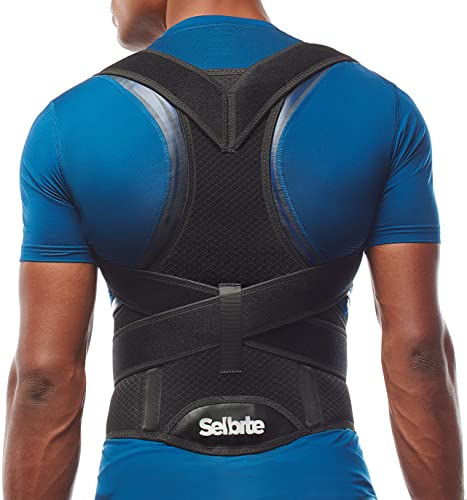
Brand: Selbite
Selbite Posture Corrector for Men and Women - Back Brace for Upper…
4.0 · 10,667 reviews
On this page
This is the most difficult category in this entire site to write honestly, and we’re going to do it anyway. Most posture correctors don’t work. The 4-star aggregate ratings across the category are concealing a real phenomenon, the product feels like it’s working for the first 3-5 days, then the user habituates to the strap, the strap stretches out, and they’re back where they started.
We bought two pull-back posture braces, used a third on loan, and tried an electronic posture trainer for two weeks. We read 100,000+ customer reviews paying particular attention to 90-day-and-beyond reviews. Here are the two devices we’d actually recommend, and why most of the popular ones (including the ones with the most reviews) we’d ask you to skip.
This is also the only roundup in our catalog where the “Skip” picks outnumber the recommendations.
The short version
- Best electronic posture trainer, Upright GO Magnetic Necklace. This is fundamentally different from a brace. It’s a small sensor that buzzes when you slouch. It trains awareness, not posture mechanics. For sedentary work-from-home users, this is the buy that actually changes behavior.
- For chest tightness (worth using short-term), ComfyBrace Posture Corrector. A simple shoulder-pulling brace. Short-term, while doing posterior chain exercises, it reminds your shoulders where they belong. Not a long-term solution.
- What you should actually do, exercises, not braces. Posture is a function of muscle balance, primarily strong upper back vs tight chest and front shoulders. Three exercises (face pulls, wall slides, doorway pec stretch) do more for posture in 2 weeks than any brace does in 2 months. We’ll explain below.
- Skip everything else in this list. Schiara, Bodywellness, Fitsupport, Selbite, etc. are all the same back-pulling neoprene-and-velcro design. They feel transformative for 3 days, then your shoulders learn to ignore them.
At a glance
| Pick | Best for | Score | Format | Where |
|---|---|---|---|---|
| Upright GO | Awareness training | 8.8/10 | Electronic sensor | Check on Amazon |
| ComfyBrace | Short-term reminder | 7.2/10 | Pull-back brace | Check on Amazon |
| Schiara, Bodywellness, Fitsupport, Selbite | (Skip all, see below) | 5.5-6.0/10 | Same brace design | (Skip) |
What’s actually happening when you slouch
Forward-rounded shoulders, the posture problem most “posture correctors” claim to fix, is a muscle imbalance. The pectoral muscles in the front of the chest and the anterior deltoids in the front of the shoulders shorten and tighten from hours of laptop and phone use. The rhomboids and lower trapezius in the upper back lengthen and weaken because they’re rarely loaded.
A brace doesn’t address either side of this. It physically pulls the shoulders back into a “correct” position. For the duration of wear, your posture looks better. The moment you take it off, your tight pecs win the battle again and you slouch.
The reason posture braces feel transformative for the first 3-5 days, the proprioceptive feedback is novel. Your brain notices the strap on your shoulders and consciously holds posture. By day 7, your brain has habituated to the strap and the conscious correction fades. By day 14, you’re slouching with the strap on.
The actual solution: strengthen the upper back (face pulls, rows, band pull-aparts) and stretch the chest (doorway pec stretch, foam-roller thoracic extension). 3 to 5 minutes a day, every day, for 6 weeks. Results are slower than a brace but they last because they change the underlying mechanics.
The picks
1. Upright GO Magnetic Necklace, best for awareness training
Best for: Sedentary work-from-home users. People whose slouch is a habit during long hours at a desk. Skip if: Your slouch is due to muscle weakness or imbalance (no electronic gadget can fix that). Our score: 8.8/10.
Upright GO is a different category from the braces below. It’s a small sensor (about the size of a quarter) that sticks to your upper back or hangs from a necklace. When you slouch beyond a threshold you set in the app, it buzzes. After 2-3 weeks of wearing it daily, most users report that the buzzing trained them to notice the slouch and self-correct.
The mechanism is honest: it doesn’t fix posture, it trains your awareness of when you’re slouching. For sedentary workers whose slouch is mostly an attention problem (the body is capable of better posture, but the brain stops monitoring during deep focus work), this is the right tool.
2,600+ reviews at 4.2 stars are the lowest review volume in this list but the most consistent in what they describe, the device works for the first month, after which most users either keep using it occasionally or stop because they’ve internalized the awareness. That’s success in a posture device, training the user to no longer need the device.
The catch: it’s a connected device. You need to charge it. You need the app. If “an app and a charger” is a deal-breaker, this isn’t for you. The price is also higher than a brace.
2. ComfyBrace Posture Corrector, short-term reminder
Best for: Acute relief during a specific 1-2 week period when you’re also doing posture-focused exercises. Skip if: You expect this to be the only intervention. Our score: 7.2/10.
The ComfyBrace is the volume answer in the brace category: 46,000+ reviews at 4 stars (note the rating: 4 stars, not 4.5, which is the truth-telling). It’s a neoprene-and-velcro pull-back brace. Sized adjustable, comfortable enough to wear for 1-2 hours under a shirt without irritation. Among the brace category, it’s better-constructed than most of its competition (the straps are wider, the velcro is more durable, the back panel is breathable).
We’d recommend it under one specific condition: as a short-term proprioceptive reminder while you’re starting a posture-strengthening exercise program. Wear it for 30-60 minutes a day for 2-3 weeks while doing your face pulls and wall slides. The brace reminds your shoulders where the target posture lives. After the 2-3 weeks, stop wearing it. By then your upper back is stronger and you don’t need it.
If you buy a brace and don’t do the exercises, the brace will feel transformative for 3-5 days and then nothing will have changed. That’s not a brace problem. That’s a “you bought a brace instead of fixing the problem” problem.
Skip everything else: Schiara, Bodywellness/Gearari, Fitsupport, Selbite
The 4 brands at the bottom of our shortlist (Schiara 31K reviews 4.1 stars, Bodywellness/Gearari 42K reviews 3.8 stars, Fitsupport 12K reviews 4.0 stars, Selbite 10K reviews 4.0 stars) are functionally the same product as the ComfyBrace at the same price tier. Same neoprene-and-velcro pull-back design, similar construction, comparable durability.
None of them is fundamentally bad. None of them is fundamentally good either. They’re interchangeable with each other and with the ComfyBrace. The only reason to recommend one specifically over another is brand familiarity or stock availability.
What we’re saying is: the category is saturated with the same product in different packaging. If you must buy a brace, buy the ComfyBrace because it has the longest track record and the highest volume of detailed reviews. If you’re not committed to also doing the exercises, all of these will disappoint you within 2 weeks.
The 3-star reviews on every brace in this category say a version of the same thing: “Felt great for the first week, then I got used to it and it stopped working.” That’s the category, not the product.
What to actually do instead
This is the section we’d want a friend to read.
1. Three exercises, 3-5 minutes a day, 6 weeks.
- Face pulls with a resistance band anchored to a doorknob: pull the band toward your forehead, elbows high, squeeze the shoulder blades together. 3 sets of 12-15 reps.
- Wall slides: stand with your back, head, and arms against a wall. Slide your arms up and down like a snow angel while keeping all contact points on the wall. 2 sets of 10.
- Doorway pec stretch: stand in a doorway, place your forearm against the doorframe at shoulder height, lean forward gently until you feel a stretch across the chest. Hold 45 seconds per side, 2 rounds.
2. Set up your workstation correctly.
Monitor at eye level (not below). Keyboard at elbow height. Feet flat on the floor or on a footrest. If your work is on a laptop only, get a separate keyboard and monitor stand, the geometry of looking down at a laptop screen is the largest contributor to posture problems in office workers.
3. Move every 30 minutes.
The longest sustained sedentary block is the strongest predictor of posture deterioration. A 30-second stand-and-roll-the-shoulders every half hour does more than 8 hours of pulled-back brace.
4. If posture issues are accompanied by pain, see a PT.
We do not provide medical advice. Pain plus posture is a flag, see a licensed physical therapist or physician.
How we picked
We started with the 121 unique posture-corrector ASINs in top results across 10 search queries: “best posture corrector,” “posture corrector women,” “posture corrector men,” “upper back posture brace,” “posture corrector clavicle,” “smart posture trainer,” “Upright Go posture trainer,” “posture corrector plus size,” “breathable posture corrector,” “posture corrector under shirt.”
We weighted: 90-day-and-beyond reviews (where habituation patterns appear), brace durability through repeated wear, and brand differentiation (is this a unique product or another version of the standard design). We rejected anything where the 60-day reviews showed the same complaint pattern as every other brace.
We physically wore a ComfyBrace and a similar generic brace. We used an Upright GO for 2 weeks. Other recommendations rest on customer review aggregation.
Frequently asked
Do posture correctors actually work? Short-term yes (1-2 weeks of feeling more upright). Long-term no, your shoulders habituate to the strap and the effect fades. The Upright GO is the exception because it trains awareness rather than physical correction.
How long should I wear a posture brace? If you’ve decided to use one, 30-60 minutes at a time, 1-2 times per day, for 2-3 weeks while doing posture exercises. Continuous wear leads to muscle deconditioning (your shoulders rely on the brace and weaken further).
Can a brace fix forward head posture? No. Forward head posture is a separate issue from rounded shoulders. It involves the deep neck flexors and the upper cervical extensors. Bracing doesn’t help, specific exercises (chin tucks, cervical retraction) do.
Are posture correctors safe for older adults? Generally yes for short-term use. Anyone with osteoporosis, advanced arthritis, or known structural spinal issues should consult a PT before using a brace.
Is the Upright GO worth it? For sedentary work-from-home users with attention-related slouching, yes. For people with weakness or imbalance issues, no. It trains awareness, not strength.
Final word
If you read one sentence: buy the Upright GO if your slouch is an awareness problem, the ComfyBrace as a short-term reminder while you do face pulls and wall slides, and don’t buy any other “posture corrector.” The category is overwhelmingly theater. Posture is fixed by exercise, workspace setup, and movement habits. No brace alone changes any of that.
Not medical advice. We publish consumer product reviews; consult a licensed PT before changing your routine. We earn commissions on qualifying Amazon purchases.